The alarm goes off and your first thought isn't the day ahead. It's your back. That familiar tightening across the lower spine. The hip that needs a minute before it cooperates. The neck that feels like you slept at a 40-degree angle — because, it turns out, you probably did. You lie there doing the math: you're not even out of bed yet and you already feel like you've been awake for six hours.
You tell yourself it's age. Stress. The run you did last week. You scroll through the usual suspects and land on nothing definitive, so you get up, take something for the pain, and get on with your day. By noon it's faded. By the next morning it's back.
This is the pattern millions of Americans live inside — and almost none of them know what's actually causing it.
The Year Everything Failed
When the pain started for me, I did what anyone would do. I booked a doctor's appointment. She said my spine looked fine on the imaging. Suggested I strengthen my core. I did — three months of targeted exercises, twice a week. The pain got marginally better during the day. Mornings were unchanged.
I saw a physical therapist next. He identified some hip flexor tightness and gave me a stretching routine. I followed it religiously for six weeks. I'd roll out of bed and go straight to the mat. Some mornings it helped. Most mornings it didn't. It felt like I was managing the pain, not solving it.
Then a chiropractor. Then a standing desk. Then a new pillow. I spent close to $800 over eighteen months on solutions that each made a small, temporary difference and left the underlying problem completely intact. Every morning, I'd wake up and feel the same slow-creeping stiffness and think: maybe this is just what my body does now.
That thought — maybe this is just what my body does now — is where most people stop. It's where I stopped. It sounds like acceptance, but it's actually just exhaustion. You've tried enough things that didn't work that you run out of ideas and start to assume the problem is you.
The Thing That Was Quietly Breaking Down While You Slept
Here's what I didn't know until I started researching it: foam mattresses fail invisibly. Not dramatically — no obvious sag, no visible damage, nothing you'd notice walking past the bed. But the foam that was supporting your spine when the mattress was new has been slowly compressing under your body weight every single night. After three to five years, industry-standard foam (manufactured at 1.2 pcf density — the spec used in the vast majority of mattresses sold in America) has lost a meaningful percentage of its structural integrity.
The cover looks the same. The mattress feels roughly the same when you press your hand into it. But when you lie on it for eight hours, with the full weight of your body settling in, you are sinking into a surface that no longer provides the spinal support it once did. Your lumbar region — which needs active support to maintain its natural arch — drops. Your hips tilt. Your shoulders round. Your body spends the night in a posture that no amount of daytime stretching can fully undo, because you go back to the same position the very next night.
This is not a fringe theory. It is why "sagging and body impressions" is the single most common complaint in mattress industry surveys, year after year. The mattress looks fine. The damage is structural and internal and completely invisible. And nobody — not your doctor, not your PT, not your chiropractor — is going to tell you to replace your mattress, because that's not their job.
Why the Fix Isn't Another Foam Mattress
If the problem is foam compressing over time, the obvious answer seems like better foam. And better foam helps — up to a point. But there's a deeper mechanical issue that foam alone can't solve: foam is passive. It absorbs your weight. It conforms to your shape. It doesn't push back.
Your spine doesn't need to be cradled. It needs to be supported — actively, responsively, and differently across the lumbar, torso, hip, and shoulder zones, because each of those areas has different weight and different support requirements. A surface that treats your entire body as one uniform weight is a surface that is failing some part of you every night.
Gel foams. Cooling foams. Memory foam "with lumbar zones." These are marketing iterations on the same fundamental material — dense, closed-cell foam that has no mechanical response to the differences in your body. They feel different in a showroom. They don't solve the underlying problem.
The Switch That Actually Fixed It
What changed things — for me, and for thousands of people whose stories echo the same pattern — was switching to a hybrid mattress built around an individually pocketed coil system. Not because it was fashionable, but because the mechanics are fundamentally different.
Each coil in a pocketed system is wrapped independently and responds to localized pressure on its own. Where your hips are heaviest, those coils compress further. Where your lumbar region needs support, coils extend upward to meet it. The mattress isn't waiting for your body to sink into it — it's actively responding to your body's specific shape and weight distribution, all night long, as you shift position.
Combined with high-density foam that doesn't compress and fail over years of use, the result is a sleep surface that keeps your spine in the same neutral alignment on night one that it does on night three hundred. The morning stiffness — the thing I'd spent years trying to stretch and doctor and chiropract my way out of — was a mattress problem. It had always been a mattress problem.
Three firmness options — 80% of buyers choose Luxury Firm, the balanced choice for back, side, and combination sleepers.
"Best mattress I've ever slept on. I wake up refreshed and without back pain." — Verified Customer
Handcrafted by skilled American workers with over 75 years of mattress manufacturing excellence.
The One I Switched To — and Why It's $500 Off Right Now
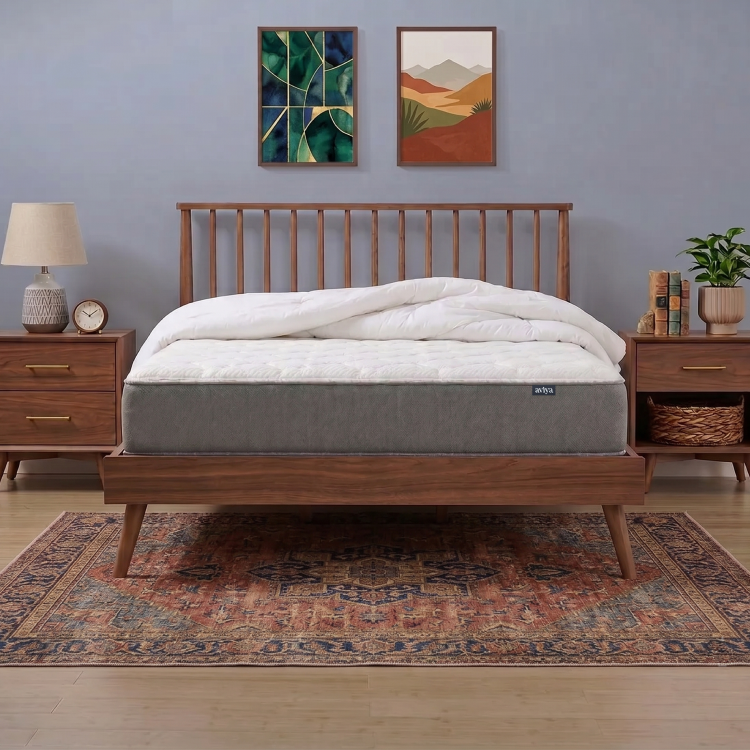
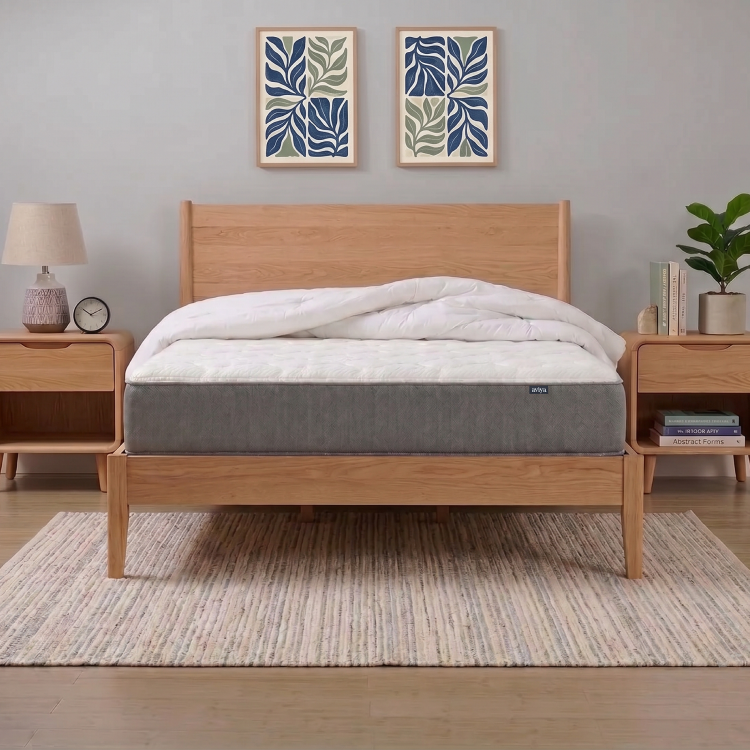
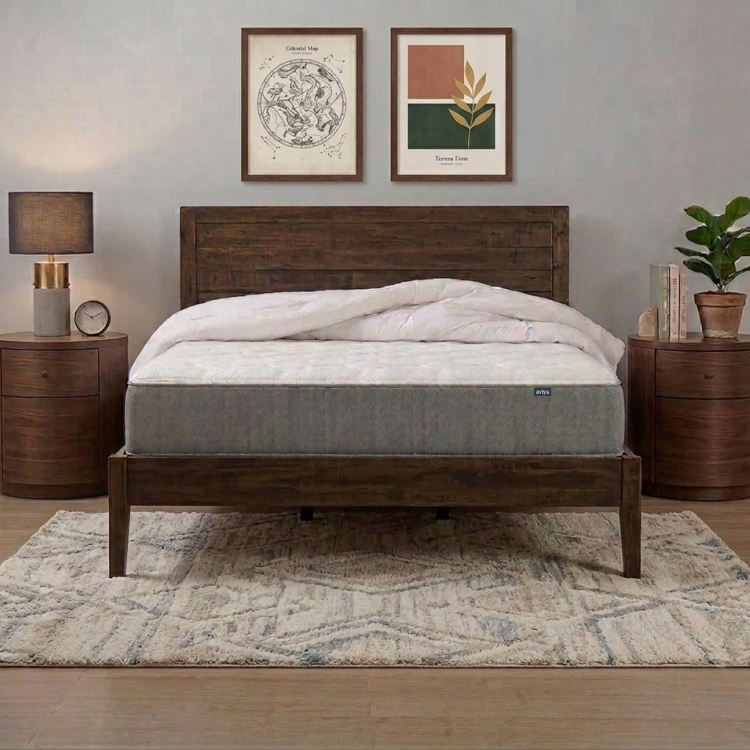
The mattress that made the difference is the Aviya — a hybrid innerspring made by a company that has been manufacturing mattresses in America for 75 years. It uses 1.8 pcf high-density foam (50% denser than the industry standard that silently fails you), 850–1,200 individually pocketed 15-gauge steel coils depending on size, and a PremiumEDGE support system that prevents the edge collapse most mattresses develop within a few years.
It has been reviewed by Sleep Foundation, New York Magazine's Strategist, HGTV, Tuck Sleep, Sleep Judge, and Mattress Clarity — all independently, none paid. The consensus is consistent: exceptional construction quality, strong support for back and combination sleepers, and a price point that significantly undercuts the luxury brands it outperforms in testing.
It currently ships free via FedEx, comes with a 100-night home trial, and is backed by a 10-year warranty with one of the most rigorous body-impression guarantees in the industry. If the pain doesn't get better, you return it. There is no risk in the equation — only the question of whether you want to keep waking up the same way.
The 1.8 pcf foam is what makes the 10-year warranty possible — it holds its shape where industry-standard foam quietly collapses.
The 1.8 pcf foam density is what makes the 10-year warranty possible — it holds its shape where standard foam quietly fails.
Reviewed by Sleep Foundation · New York Magazine Strategist · HGTV · Tuck Sleep · Mattress Clarity